City of Portland
Native Plants List (free PDF)
https://proudground.org/wp-content/uploads/2016/02/native_plant_list.pdf
Oregon State University
Gardening with Oregon Native Plants West of the Cascades (free PDF)
http://corvallis.npsoregon.org/OSU%20Gardening%20with%20Oregon%20Native%20Plants.pdf
Oregon State University
Recommended Native Plants for Western Oregon (free PDF)
https://extension.oregonstate.edu/sites/default/files/documents/1/nativeplantreclist.pdf
City of Portland
Native Plant Poster (free PDF)
https://www.portlandoregon.gov/bes/article/40355
Metro
Native plants for Willamette Valley Yards (free PDF)
https://www.oregonmetro.gov/native-plants-willamette-valley-yards-booklet
Sunday, January 20, 2019

Saturday, January 12, 2019
Best naturescaping groundcover for sunny dry areas: Kinnikinnick (Bearberry)
Kinnikinnick (also known as Bearberry, Arctostaphylos uva-ursi (L.) Spreng.) is a Pacific Northwest Native and is our top pick for a naturescaping groundcover in dry, well drained, sunny areas of the garden. Kinnikinnick is an evergreen, 6"-8" tall wood plant with trailing branches spreading up to 10 feet wide. It has white or pink urn-shaped flowers and reddish berries.
Kinnikinnick attracts butterfly caterpillars, butterflies and hummingbirds. Its leaves are eaten by many mammals including deer, elk, bighorn sheep and moose. The fruit is eaten by birds such as thrushes, wrens, grouse, robins and waxwings, as well as deer, bears and other small mammals.
Kinnikinnick hosts the Hoary Elfin, one of the first non-hibernating butterflies to appear during the spring. The Hoary Elfin is a small butterfly with a wingspan of 7/8 to 1 and 1/8 inches. They are listed as a vulnerable species in the State of Washington and are under review in the State of Oregon.
Kinnikinnick attracts butterfly caterpillars, butterflies and hummingbirds. Its leaves are eaten by many mammals including deer, elk, bighorn sheep and moose. The fruit is eaten by birds such as thrushes, wrens, grouse, robins and waxwings, as well as deer, bears and other small mammals.
Kinnikinnick hosts the Hoary Elfin, one of the first non-hibernating butterflies to appear during the spring. The Hoary Elfin is a small butterfly with a wingspan of 7/8 to 1 and 1/8 inches. They are listed as a vulnerable species in the State of Washington and are under review in the State of Oregon.
 |
| Photo by Walter Siegmund. This file is licensed under the Creative Commons Attribution-Share Alike 3.0 Unported license. |
_-_fruits_and_leaves.JPG) | ||
| Photo by Jesse Taylor. This file is licensed under the Creative Commons Attribution-Share Alike 3.0 Unported license. |
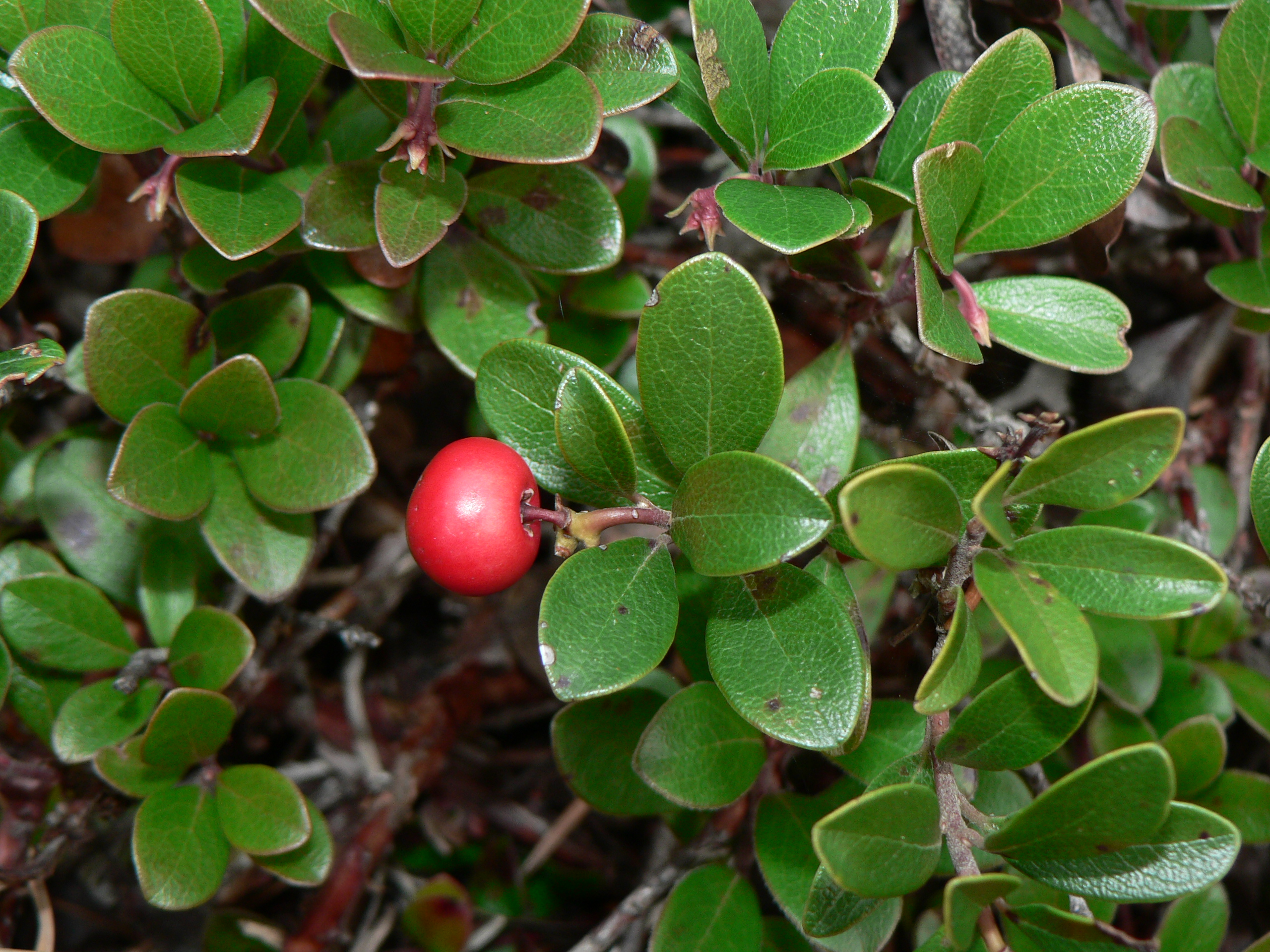 |
| Photo by Walter Siegmund. This file is licensed under the Creative Commons Attribution-Share Alike 3.0 Unported license. |
 |
| Photo by Walter Siegmund. This file is licensed under the Creative Commons Attribution-Share Alike 3.0 Unported license. |
Subscribe to:
Posts (Atom)